
Tulip
The tulip is one of the most universally loved flowers in the world — and one of the most misunderstood when it comes to care. Most people do not know that tulips continue to grow after being cut. They are not static like a rose. A tulip stem will elongate by several centimetres in a vase, and the bloom will open and close in response to light and temperature. At Flower Icon, we consider the tulip one of the most dynamic cut flowers we work with — alive in a way that other flowers simply are not. Here is everything you need to know to get the most from them.

| Quick Facts | |
|---|---|
| Type | Cut flower / spring bulb flower |
| Botanical name | Tulipa (multiple species and cultivars) |
| Colors | Almost every color — red, orange, yellow, white, pink, purple, near-black, bi-color, parrot varieties |
| Vase life | 5–10 days with proper care |
| Season | Spring (February–May); limited availability outside this window |
| Best for | Spring bouquets, romantic gifts, color-forward arrangements, any occasion |
| Difficulty | Low to moderate — resilient but needs specific handling to stay upright |
What Makes Tulips Different
Tulips are one of the only cut flowers that grow after being placed in a vase. After cutting, a tulip stem will elongate — often by 2–5cm over the first few days — as the plant continues drawing water and developing. This means an arrangement with tulips on day one will look noticeably different on day four, as the tulips reach upward and the blooms open wider.
The blooms also open and close in response to light and temperature. In bright light and warm conditions, tulips open wide. In the dark or in cooler temperatures, they close. This responsiveness is one of the reasons tulips feel more alive than most cut flowers.
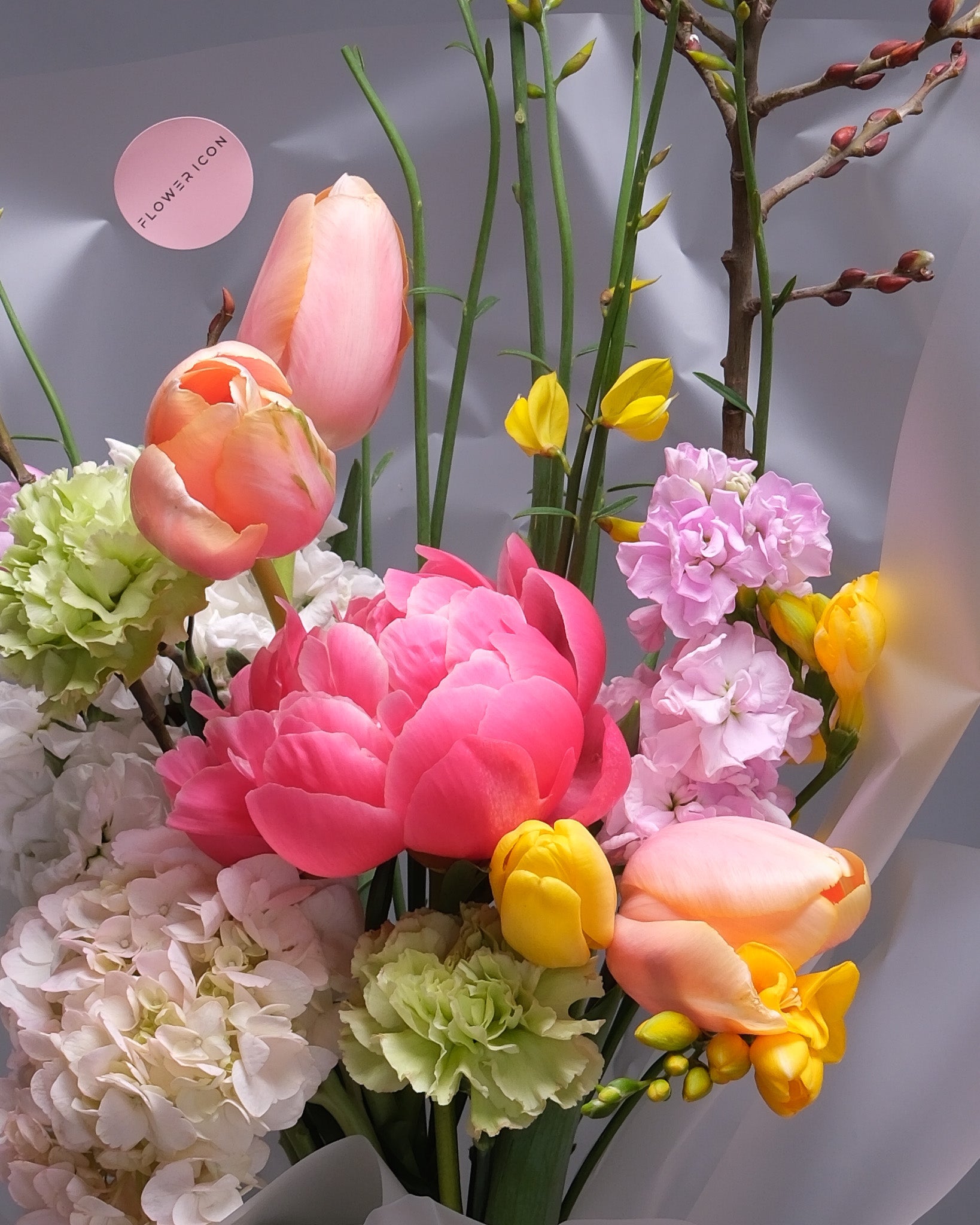
There are hundreds of tulip varieties, broadly grouped into: single early, double early, triumph, parrot, lily-flowered, fringed, and viridiflora. Parrot tulips — with ruffled, feathered petals in dramatic colour combinations — are the most striking for bouquet work. Double tulips (sometimes called peony tulips) have densely layered petals that create a full, lush bloom similar in silhouette to a peony — an exceptional choice for anyone who loves the peony aesthetic but is working outside of peony season.
Tulip Care: The Florist's Guide to Maximum Vase Life
1. Recut stems at a 45-degree angle immediately before placing in water
Tulip stems seal over quickly when exposed to air. Always recut before transferring to a new vase. A sharp, clean blade gives the cleanest cut and the best water uptake.
2. Use cool or cold water only
Tulips hydrate best in cool water and hold much longer in cool environments. Warm water accelerates opening and significantly shortens vase life. Cold water keeps the blooms tighter for longer and extends the period before they fully open.
3. Try the pin trick for drooping heads
A single clean pin-hole through the stem just below the flower head releases trapped air and prevents the airlock that causes the bloom to droop despite a healthy stem. This is particularly useful for stems that arrive with heads bending forward.
4. Change water daily
Tulips are heavy drinkers and produce compounds that cloud the water quickly. Daily water changes and fresh stem cuts make a more significant difference to tulip vase life than with almost any other cut flower.
5. Keep away from fruit
Ethylene gas from ripening fruit causes tulips to open and fade faster than almost any other cut flower. Keep them in a separate room from any fruit bowl.
6. Let them grow — do not fight the elongation
Rather than trying to maintain the arrangement exactly as it arrived, lean into the tulip's natural tendency to grow and reach. As tulips elongate in the vase, the arrangement opens up and the blooms reach toward the light. This is part of the tulip's character, not a flaw.
How Long Do Tulips Last?
Tulips typically last 5–10 days in a vase, depending on variety and care. Stems with tightly closed buds when received will last toward the longer end, continuing to open progressively over several days. Double and parrot varieties often last slightly shorter than standard single varieties — their heavier bloom heads place more stress on the stem.
Tulip Meaning and Symbolism
Different tulip colours carry different traditional meanings:
- Red tulips — deep love and passion. The most romantic of the tulip colours, carrying much of the symbolic weight of red roses with a lighter, spring-forward character.
- Yellow tulips — cheerful warmth and friendship. A yellow tulip bouquet communicates joy and optimism.
- Purple tulips — royalty, admiration, and respect. A thoughtful choice for a person you admire significantly.
- White tulips — purity and forgiveness. A quietly beautiful choice for an apology or a fresh start.
- Pink tulips — affection, happiness, confidence. One of the most versatile colours for any occasion.
Tulips in Bouquets and Arrangements
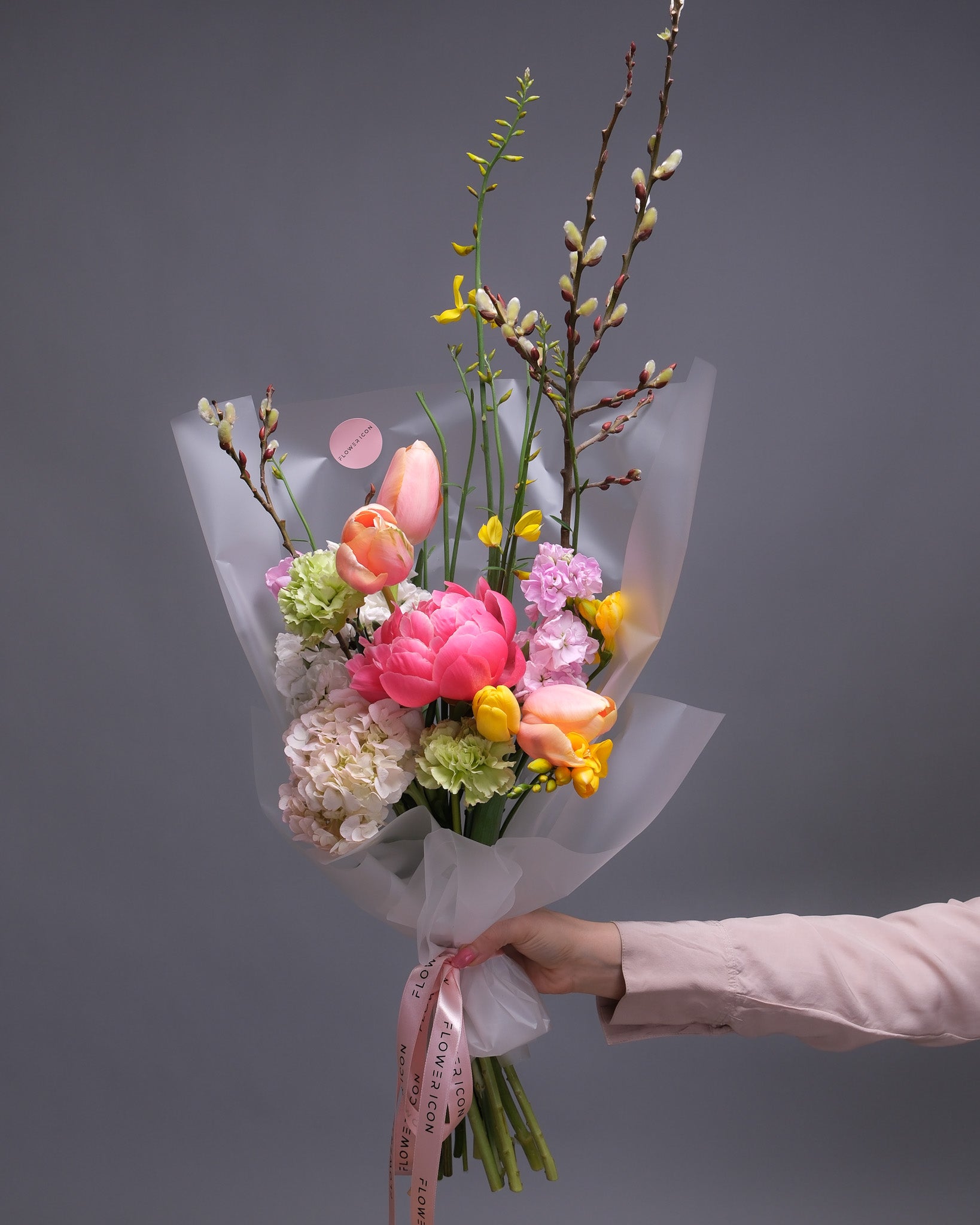
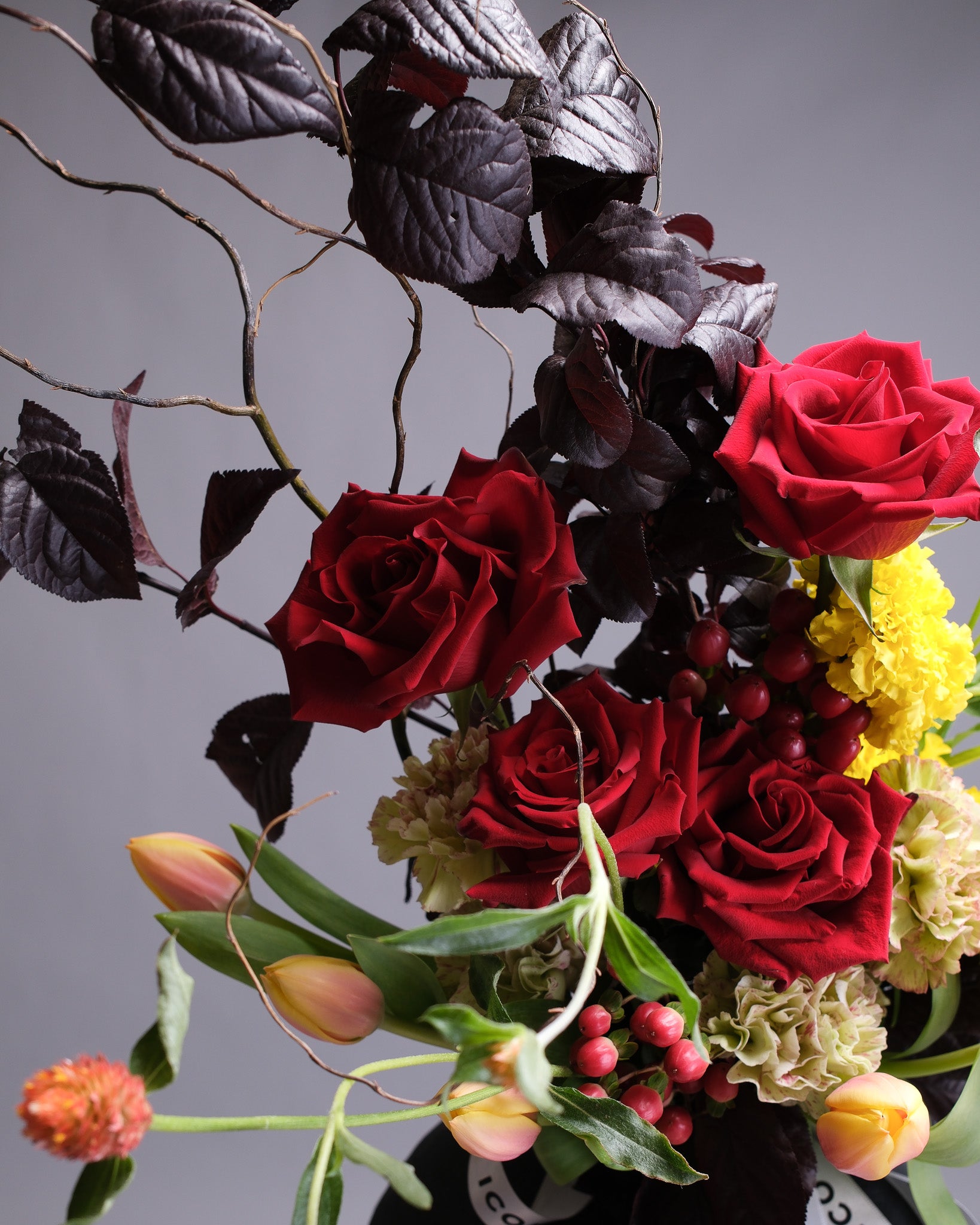
Tulips are one of the most versatile arrangement flowers available. A single-colour bunch of tulips in a simple vase — stems at slightly different heights, fresh water — is one of the cleanest and most satisfying arrangements in floristry. No filler needed. The tulip does the work entirely on its own.
Pairing suggestions: Tulips with daffodils and narcissus for a classic spring arrangement. Tulips with hyacinths for fragrance and seasonal cohesion. Tulips with peonies when seasons overlap — late April through early May in San Francisco is the window where this combination is possible and extraordinary. Parrot tulips with eucalyptus and ranunculus for a textural, modern spring arrangement.
Order Tulip Bouquets in San Francisco

Tulip season in San Francisco runs from February through May, with peak availability and quality in March and April. Flower Icon sources the best available tulip varieties — including parrot and double tulips — throughout the season. Same-day delivery is available across San Francisco and the Bay Area.
Shop fresh flowers and luxury bouquet of flowers at Flower Icon, and enjoy same-day flower delivery in San Francisco&Bay Area—send the perfect flower bouquet for any occasion.





Luxury flower delivery across San Francisco and the Bay Area
Flower Icon designs every arrangement in our SoMa studio in San Francisco and delivers same-day across San Francisco, the Peninsula, East Bay, Marin, Silicon Valley, and Wine Country — anywhere within 45 miles of downtown SF. Order by 4pm PT for same-day delivery on eligible arrangements.
Browse same-day delivery · See all flowers · Delivery information