
snowball viburnum
The snowball viburnum (Viburnum opulus 'Roseum', often labeled simply "viburnum" in floral design) is a deciduous spring shrub whose dense, ball-shaped clusters of tightly packed florets open chartreuse green and gradually fade to pure white as they age. For floral designers, no other bloom delivers the same sculptural lime-green volume — which is why it shows up across so many Flower Icon spring bouquets, often as the architectural counterpoint to softer focal flowers like peonies, ranunculus, and garden roses.

Quick facts
| Botanical Name | Viburnum opulus 'Roseum' (also sold as Viburnum opulus 'Sterile') |
| Common Names | Snowball viburnum, snowball bush, European cranberry bush (sterile cultivar) |
| Bloom Season | Late April through mid-June; the chartreuse phase peaks in early May |
| Fragrance | Light, faintly grassy; subtle compared to the showy bloom |
| Vase Life | 5–8 days (up to 10 with proper conditioning) |
| Symbolism | Renewal, optimism, springtime abundance |
| Native To | Europe, North Africa, and Central Asia (sterile cultivar developed by horticulturists) |
How to care for cut snowball viburnum
- Snowball viburnum stems are woody — re-cut at a sharp 45° angle and split the base of the stem about an inch up using clean shears. This lets the dense flower head draw water effectively.
- Strip any leaves that would sit below the waterline. Submerged leaves decay quickly and shorten the life of the entire stem.
- Place stems immediately in cool, clean water. If the heads look slightly droopy on arrival, submerge the entire bloom in cold water for 30–60 minutes — they rehydrate dramatically.
- Refresh water every 36–48 hours and re-trim a quarter inch from the stem each time.
- Avoid direct sun and warm rooms. In San Francisco apartments without AC, move the arrangement to the coolest room overnight.
- Floral food works well for viburnum from day one — unlike lily of the valley, it tolerates preservative without issue.
Vase life
Expect five to eight days of strong performance. The chartreuse-green florets gradually pale toward white and then cream — many designers (and our customers) consider the later cream stage just as beautiful as the opening green. Heads that arrive looking slightly soft almost always perk up within an hour of being placed in cool water with the woody stem split intact.
Bouquet pairing ideas
- Snowball viburnum + blush peonies — the quintessential May wedding pairing; soft pink against architectural lime green
- Snowball viburnum + French tulips + delphinium — the structure behind our Lemon Sky bouquet
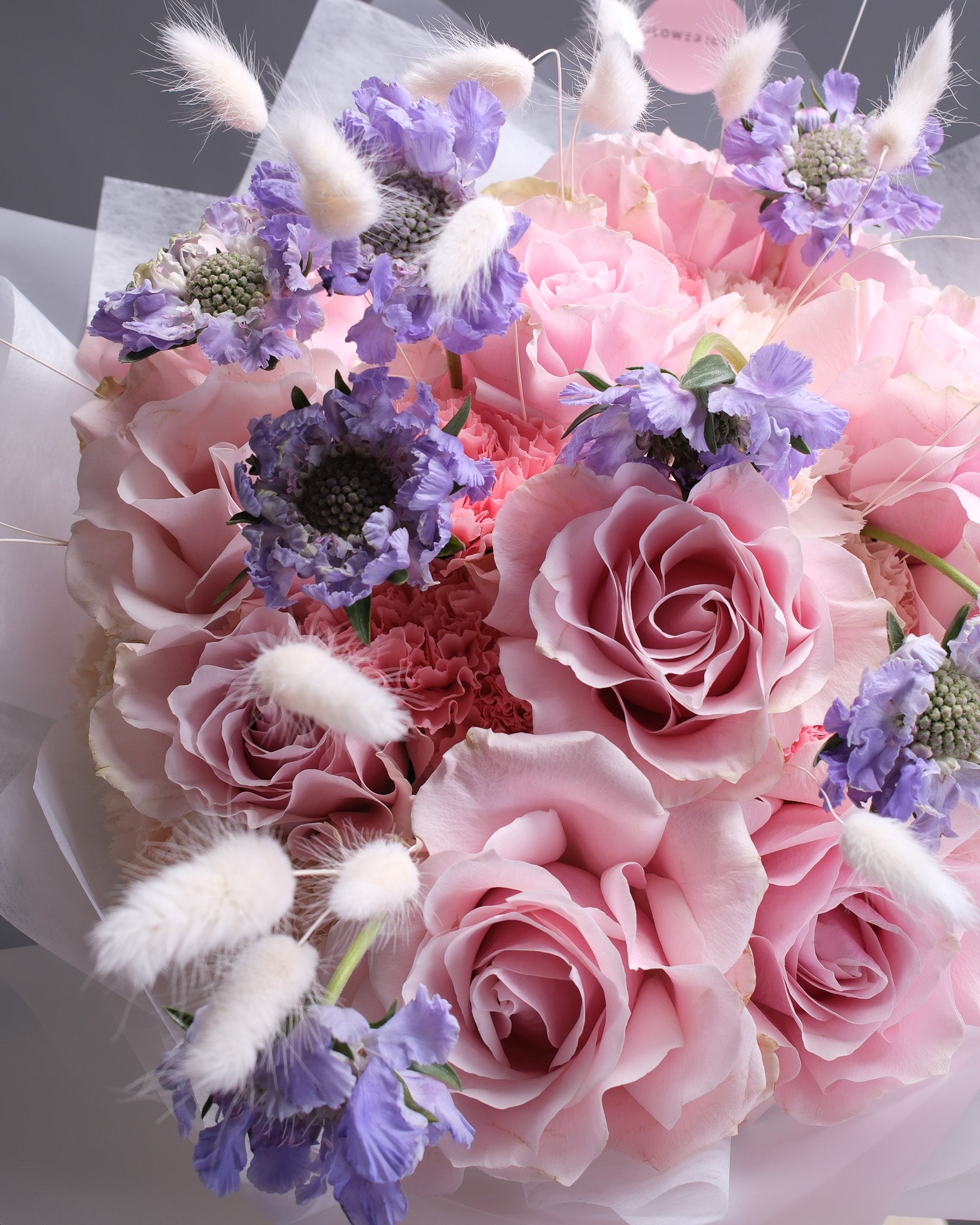
- Snowball viburnum + scabiosa + sweet peas — airy, garden-style, foraged feel
- Snowball viburnum + white roses + amaranthus — monochrome with weight and movement
- Snowball viburnum + ranunculus + anemone — textural spring bridal palette
For pairing context, see our deep pages on peony and tulip — both pair beautifully with viburnum's lime-green volume.
Symbolism and design history
Snowball viburnum became a signature of mid-20th-century European garden design and crossed into bridal floristry in the 1990s, when designers began using it as a more dynamic, lower-cost stand-in for hydrangea. Symbolically, viburnum is tied to spring renewal and optimism — each cluster opens hundreds of tiny florets at once, mirroring the abundance of the season itself. In English country tradition, snowball bushes were planted near front doors as a welcoming sign of spring's arrival.
Hydrangea vs. snowball viburnum
Customers often ask whether snowball viburnum is a hydrangea — it isn't. The two look related but are botanically distinct: viburnum belongs to the family Adoxaceae and hydrangea to Hydrangeaceae. Viburnum has tighter florets, lighter weight, and a more chartreuse opening color. Hydrangea has larger, softer florets, more pastel options, and a longer vase life when properly conditioned. For wedding work in May and June, viburnum often delivers the look at lower cost; for later-summer arrangements, hydrangea takes over.
Shop snowball viburnum at Flower Icon
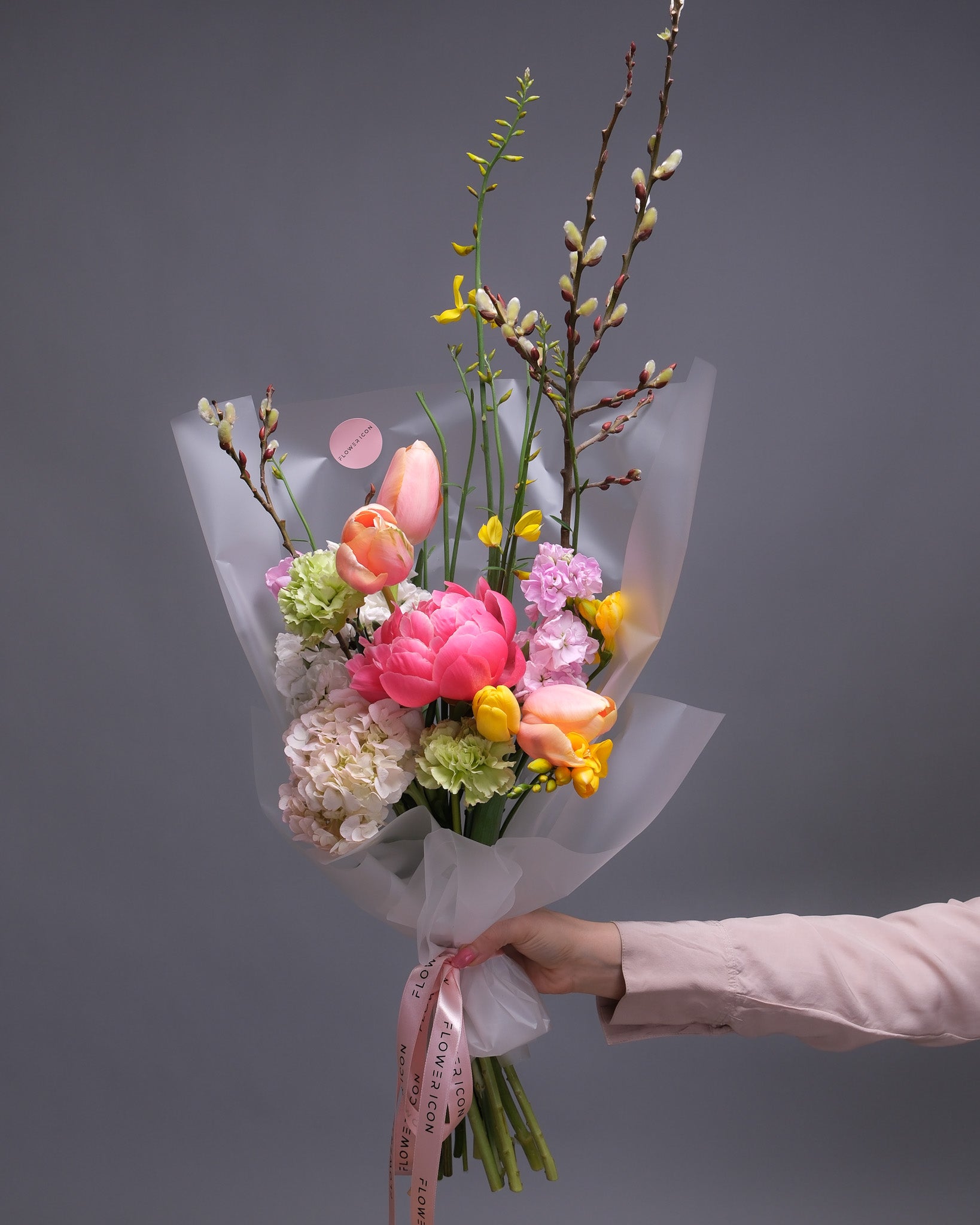
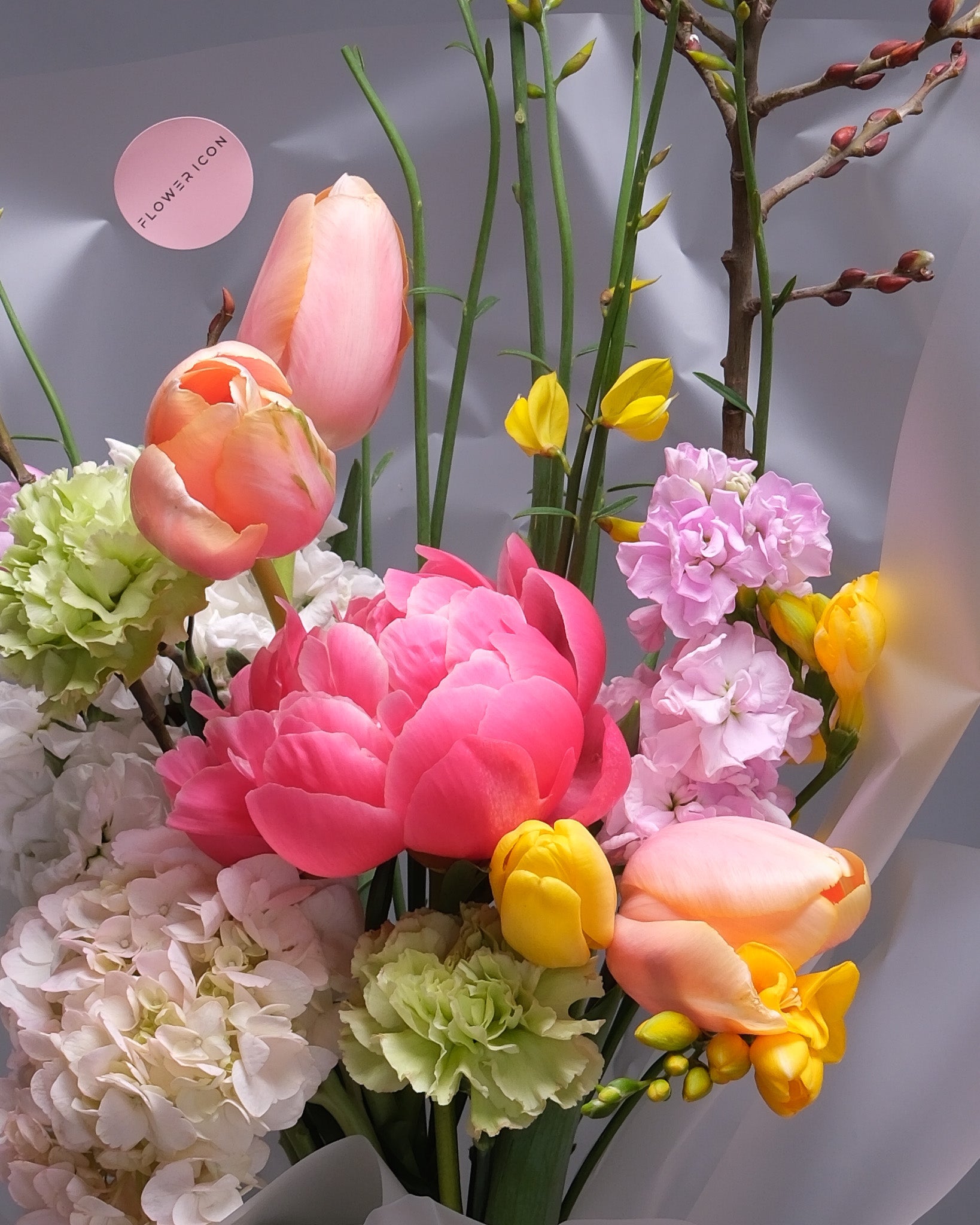
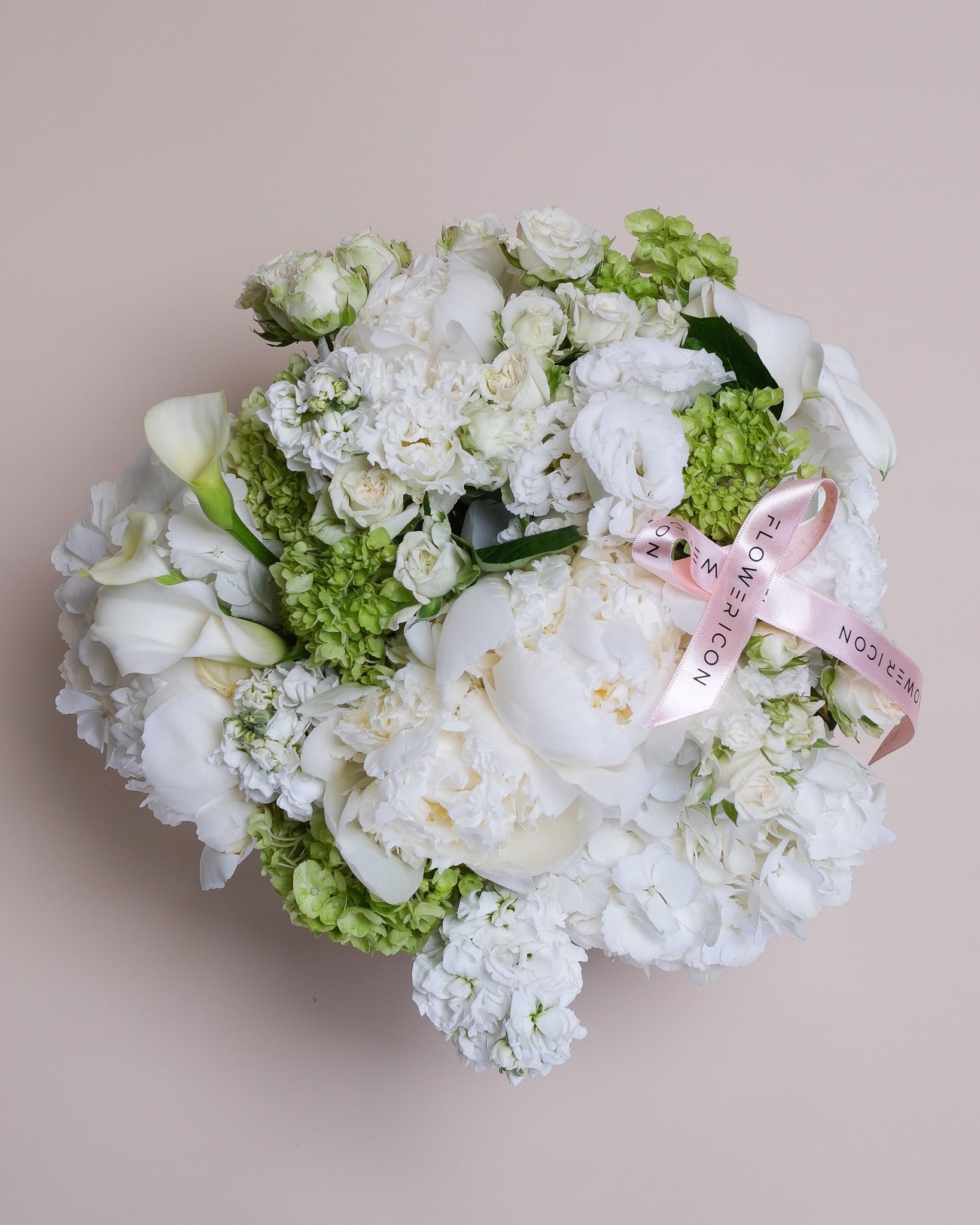
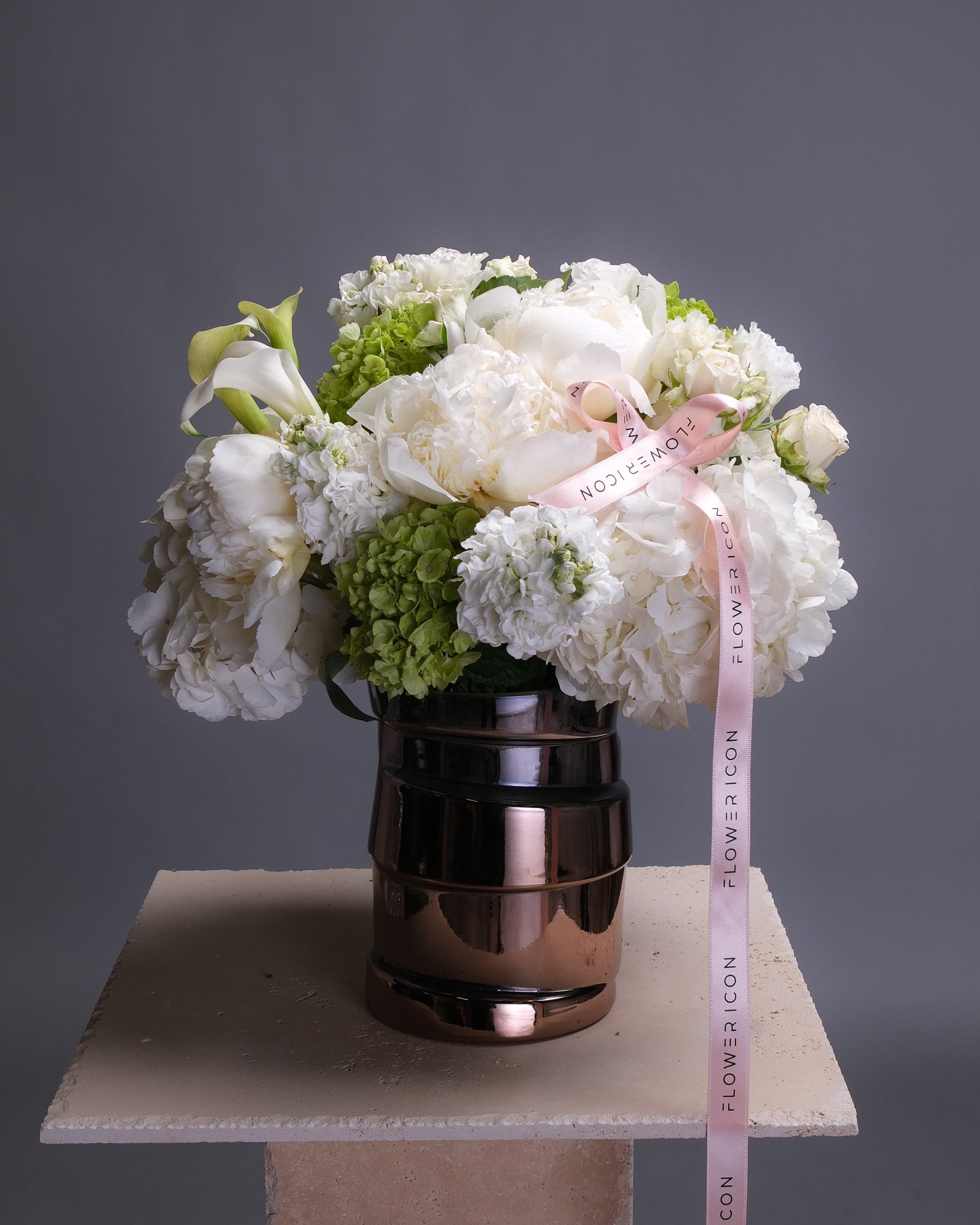
We feature snowball viburnum across our spring and early-summer arrangements. Standouts include the Lemon Sky bouquet (French tulips, delphinium, viburnum), the Crushland (peonies, green hydrangeas, viburnum), and the Hushland (white and green, blue, viburnum-forward). For larger events, our Beverly Bloom table arrangement uses viburnum as one of its structural foundations.

Flower Icon is a designer flower studio at 181 2nd Street in San Francisco, with same-day delivery on select bouquets when ordered before 4 PM and free local pickup within one mile of the studio. Explore more flowers in our flower guide.
Shop fresh flowers and luxury bouquet of flowers at Flower Icon, and enjoy same-day flower delivery in San Francisco&Bay Area—send the perfect flower bouquet for any occasion.





Luxury flower delivery across San Francisco and the Bay Area
Flower Icon designs every arrangement in our SoMa studio in San Francisco and delivers same-day across San Francisco, the Peninsula, East Bay, Marin, Silicon Valley, and Wine Country — anywhere within 45 miles of downtown SF. Order by 4pm PT for same-day delivery on eligible arrangements.
Browse same-day delivery · See all flowers · Delivery information