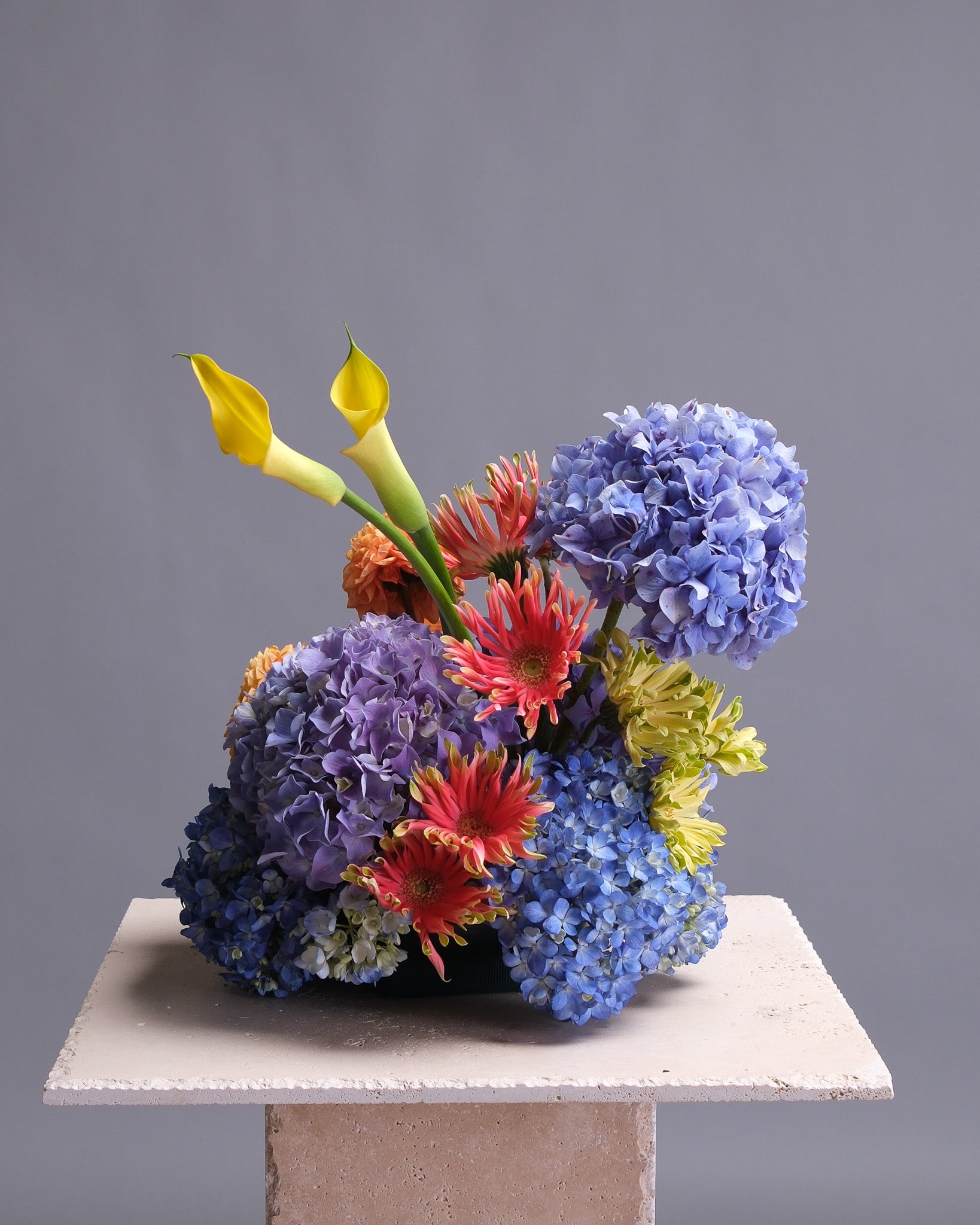
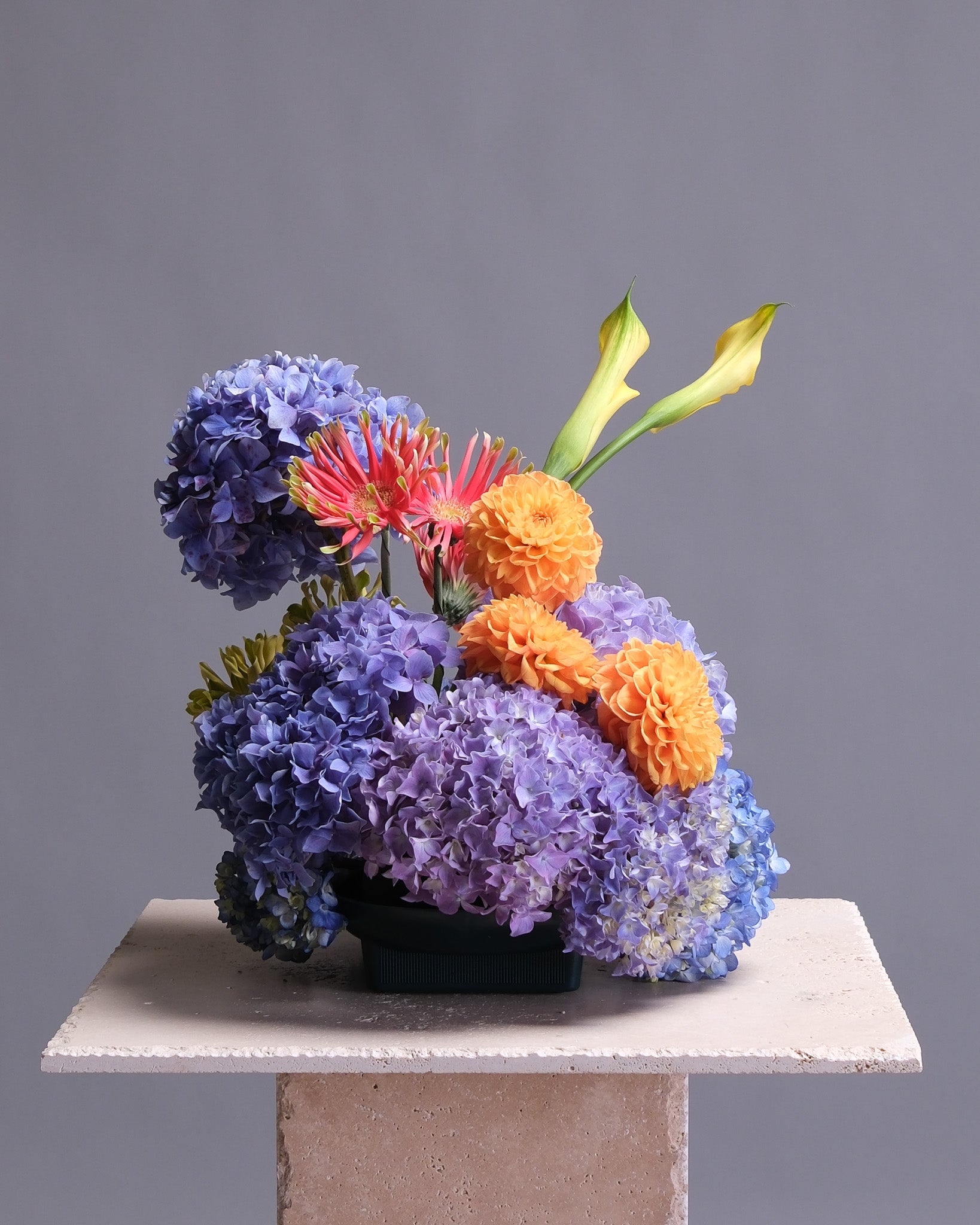
Scabiosa
Scabiosa — known to most people as the pincushion flower — is one of the most delicate and charming blooms in the florist's toolkit. A small, rounded flower head on a long, wiry stem, with petals arranged in concentric rings around a raised, domed centre that gives the flower its name. Scabiosa is light and airy where most flowers are dense. In an arrangement it moves with the slightest air current, which creates a subtle, living quality that heavier blooms cannot replicate. At Flower Icon, scabiosa is one of our favourite supporting flowers — the kind that makes every other bloom in the arrangement look better.

| Quick Facts | |
|---|---|
| Type | Cut flower / cottage garden specialty |
| Botanical name | Scabiosa (multiple species and cultivars) |
| Common name | Pincushion flower |
| Colors | Lavender, purple, deep blue-violet, white, blush, dusty pink |
| Vase life | 5–7 days with proper care |
| Season | Spring through early autumn |
| Best for | Mixed bouquets, wedding florals, garden-style arrangements |
| Difficulty | Moderate — delicate stems need careful handling |
What Makes Scabiosa Different
The pincushion flower gets its name from the raised, dome-shaped centre of the bloom — a cluster of tiny florets that protrudes above the surrounding ring of petals. It is one of the most geometrically interesting flowers available, and it photographs with extraordinary detail at close range. Each bloom resembles a hand-drawn botanical illustration come to life.
The stems are long, wiry, and naturally branching — unlike the single-stem structure of roses or sunflowers. A single scabiosa stem often carries multiple flower heads at different heights and stages of development: buds, half-open blooms, and fully open flowers on the same stem. This layered, multi-stage character adds natural variation to any arrangement and extends the window when the stem looks its best.
Scabiosa's colour range is narrow but exceptional. Lavender, deep violet, blue-purple, white, and soft blush. Particularly in the blue-violet range, scabiosa delivers something genuinely rare: truly blue flowers are uncommon in nature, and scabiosa is one of the few cut flowers that produces a convincing, vivid blue-purple that reads accurately in photography.
Scabiosa Care: The Florist's Guide to Maximum Vase Life
1. Strip lower leaves immediately
Scabiosa stems are porous and develop bacterial buildup quickly if foliage is left below the waterline. Remove all leaves below the waterline before placing in a vase.
2. Cut stems at a 45-degree angle
Fresh angled cuts every two to three days. The wiry stems seal over quickly between cuts, blocking water uptake more rapidly than sturdier stems. Use a clean, sharp blade — scissors can crush the delicate stem tissue.
3. Change water daily if possible
Scabiosa is particularly sensitive to bacterial buildup in vase water. Daily water changes significantly extend vase life compared to less frequent changes. This is the single most impactful care step for this flower.
4. Handle blooms very gently
The petals are genuinely delicate and can bruise or detach from the bloom if touched roughly or pressed against other flowers. Hold by the stem only, and give scabiosa space in arrangements — avoid packing it tightly against heavier blooms.
5. Display in a cool location
Like most cottage garden flowers, scabiosa holds significantly longer in cool conditions. Keep it away from direct sunlight, heating vents, and ripening fruit.
How Long Does Scabiosa Last?
Scabiosa typically lasts 5–7 days in a vase with proper care. Because each stem carries multiple buds at different stages of development, new blooms will continue opening as earlier ones fade — which means the stem looks fresh for longer than a single-bloom flower of comparable age. A stem with many unopened buds when received can remain beautiful for the full seven days as it progressively opens.
Scabiosa in Bouquets and Arrangements
Scabiosa is almost always a supporting flower — but a crucial one. Its airy, branching structure adds movement and visual lightness to arrangements that might otherwise feel static or heavy. In a mixed bouquet of garden roses, sweet peas, and ranunculus, a few stems of scabiosa create negative space and depth that makes the whole arrangement feel three-dimensional and alive.
The lavender and purple tones pair particularly well with blush and white flowers — a classic combination in spring and summer wedding florals. Scabiosa with white peonies and eucalyptus is one of the most reliably beautiful combinations we make at Flower Icon. It is also one of the most photogenic: the raised centre catches light differently from surrounding petals, creating natural texture and depth in images.
Pairing suggestions: Scabiosa with garden roses, ranunculus, and soft greenery for a garden-style arrangement. Scabiosa with white peonies for a classic, romantic wedding bouquet. Scabiosa with sweet peas and lavender for a soft, fragrant spring combination.
Order Scabiosa Arrangements in San Francisco

Flower Icon sources scabiosa through the spring and summer seasons when Bay Area-grown stems are available. If you would like an arrangement featuring scabiosa — for a wedding, a garden-style bouquet, or a specific colour palette — we are happy to discuss options and availability.
Our Flower Guide: Everything you need to know about the blooms we love most

Learn more about lily of the valley

Learn more about bells of ireland

Learn more about snowball viburnum

Learn more about freesia

Learn more about clematis

Learn more about scoop scabiosa

Learn more about allium cowanii

Learn more about football mum

Learn more about anemone

Learn more about butterfly ranunculus

Learn more about bear grass

Learn more about pink gerbera daisy

Learn more about cymbidium

Learn more about peony

Learn more about stock

Learn more about calla lilies

Learn more about spider gerbera daisy

Learn more about magnolia foliage

Learn more about sweet pea

Learn more about anthurium

Learn more about scabiosa

Learn more about tulip

Learn more about white king protea

Learn more about snake allium
A few ideas for your event
Here are some inspirations for your event, but the best designs are the ones we create just for you.